


The Evolving Imperative of SEO Strategy
In today’s dynamic digital landscape, a robust SEO strategy is no longer optional; it’s a fundamental requirement for sustainable business growth. As search engines, particularly Google, continue to integrate advanced AI and machine learning into their algorithms, the complexity and nuance of ranking have increased significantly. Businesses must move beyond tactical keyword stuffing to embrace comprehensive strategies that prioritize user experience, authoritative content, and technical excellence.
The current search environment, heavily influenced by factors like E-E-A-T (Experience, Expertise, Authoritativeness, Trustworthiness) and the rise of Search Generative Experience (SGE), demands a strategic approach that is adaptable and data-driven. A well-defined SEO strategy provides a clear roadmap, ensuring all optimization efforts align with overarching business objectives, from brand visibility to lead generation and revenue growth. Without a coherent strategy, SEO efforts risk becoming fragmented and ineffective.
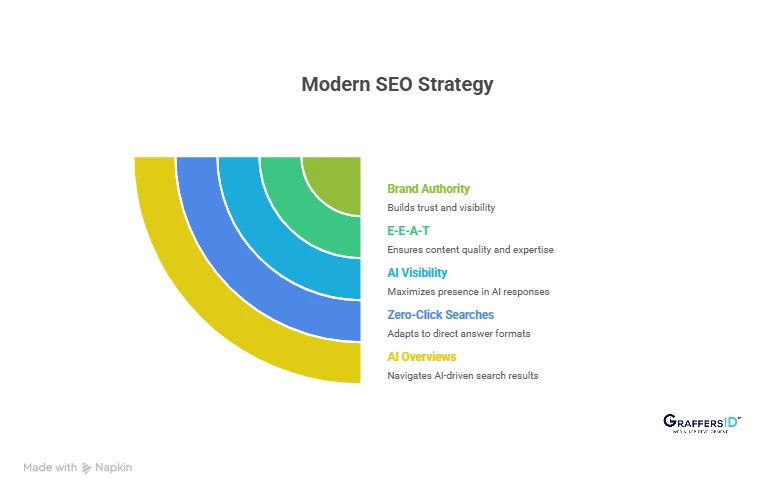
Understanding the Modern SEO Landscape (2025)
The SEO landscape in late 2025 is characterized by a heightened focus on user intent, contextual relevance, and the quality of information. AI’s pervasive influence means search engines are more adept at understanding natural language queries and delivering highly personalized results. This shift necessitates content strategies that address user questions comprehensively, demonstrating deep expertise and providing genuine value, rather than merely targeting exact-match keywords.
Furthermore, the emphasis on E-E-A-T has solidified, making it crucial for businesses to establish and demonstrate their credibility. This involves showcasing real-world experience, citing authoritative sources, and building a strong brand reputation both on and off-site. Technical performance, including Core Web Vitals, remains critical for ensuring a seamless user experience, which directly impacts search rankings and user engagement.
Core Pillars of an Effective SEO Strategy
A comprehensive SEO strategy rests upon several interconnected pillars, each vital for holistic optimization. Neglecting any one area can undermine efforts in others. These pillars include:
- Technical SEO: Ensuring search engines can efficiently crawl, index, and understand your website. This involves site architecture, mobile-friendliness, page speed, schema markup, and secure protocols (HTTPS).
- On-Page SEO: Optimizing individual web pages for specific keywords and user intent. This encompasses high-quality content, keyword integration, meta tags, header tags, internal linking, and image optimization.
- Off-Page SEO: Building authority and relevance through external signals. Key activities include strategic link building from reputable sources, brand mentions, and digital public relations.
- Content Strategy: Developing and organizing content that addresses user needs across the entire buyer journey. This involves topical authority, content clusters, and consistently producing valuable, E-E-A-T-aligned material.

Key SEO Frameworks for Implementation
Implementing an SEO strategy effectively often benefits from structured frameworks that guide execution and measurement. Two prominent frameworks are the Topic Cluster Model and the SEO Funnel Strategy.
- Topic Cluster Model: This framework organizes content around broad “pillar pages” that cover a core topic comprehensively. These pillars link to multiple “cluster content” pages that delve into specific sub-topics in detail. This structure signals topical authority to search engines, improves internal linking, and enhances user navigation.
- SEO Funnel Strategy: This approach maps content to different stages of the customer journey (Awareness, Consideration, Decision). Content at the top of the funnel (TOFU) addresses broad questions, middle-of-the-funnel (MOFU) content provides solutions, and bottom-of-the-funnel (BOFU) content drives conversions. This ensures content serves users at every stage of their interaction with your brand.
Another crucial framework is the iterative optimization cycle: Analyze, Plan, Execute, Measure, Refine. This continuous loop ensures that SEO efforts are always informed by performance data and adapted to evolving search trends and business goals.

Developing Your SEO Strategy: A Step-by-Step Approach
Crafting an effective SEO strategy requires a systematic process:
- Define Business Goals & Audience: Clearly articulate what you want to achieve (e.g., increase organic traffic by X%, generate Y leads) and understand your target audience’s needs and search behaviors.
- Conduct Comprehensive Audits: Perform technical SEO audits, content audits, and competitive analyses to identify strengths, weaknesses, opportunities, and threats.
- Keyword & Topic Research: Identify relevant keywords and topics that align with user intent and business goals, considering both short-tail and long-tail opportunities.
- Content Planning & Creation: Develop a content calendar based on your topic clusters and funnel strategy, focusing on high-quality, E-E-A-T-driven content.
- Technical Optimization: Address all technical issues identified in the audit, ensuring optimal site performance and crawlability.
- Link Building & Promotion: Implement a strategic outreach program to acquire high-quality backlinks and promote your content across relevant channels.
- Performance Monitoring & Reporting: Regularly track key performance indicators (KPIs) using analytics tools, generate reports, and communicate progress to stakeholders.

Measuring Success and Adapting for the Future
Effective SEO strategy is not static; it requires continuous measurement and adaptation. Key performance indicators (KPIs) such as organic traffic, keyword rankings, conversion rates from organic search, bounce rate, and time on page provide critical insights into performance. Utilizing dashboards that integrate data from Google Analytics, Google Search Console, and other SEO tools allows for real-time monitoring and informed decision-making.
Looking ahead, the integration of AI tools will continue to streamline various aspects of SEO, from content generation and optimization to technical audits and data analysis. Businesses must remain agile, continuously educating themselves on algorithm updates, emerging search technologies, and evolving user behaviors. Proactive adaptation, rather than reactive changes, will be the hallmark of successful SEO strategies in the coming years.


Leave a Comment