


Navigating the AI Talent Landscape: Upskilling for SMBs
The rapid evolution of AI isn’t just for tech giants; it’s fundamentally reshaping how small to mid-sized marketing teams operate. This guide cuts through the noise to provide actionable strategies for upskilling your existing team, ensuring you can leverage AI tools effectively without overstretching limited budgets or headcount. You’ll learn what skills truly matter, what to prioritize today, and what can safely be put on the back burner, allowing your business to gain real efficiencies and a competitive edge.
By focusing on practical application and strategic decision-making, you’ll equip your team to integrate AI into daily workflows, optimize campaigns, and drive measurable results, even with imperfect execution. This isn’t about becoming AI developers, but about becoming smart, effective AI users.
Why AI Upskilling Isn’t Optional Anymore
The reality is, AI is no longer a futuristic concept; it’s a present-day operational tool. From content generation to data analysis and campaign optimization, AI-powered solutions are becoming standard. For SMBs, ignoring this shift isn’t just missing an opportunity; it’s risking obsolescence. Your competitors, regardless of size, are already exploring or implementing AI to boost productivity and personalize customer experiences.
Embracing AI upskilling now is about future-proofing your marketing efforts. It’s about enabling your team to do more with less, make smarter decisions faster, and ultimately, stay relevant in an increasingly AI-driven market. This isn’t a luxury; it’s a strategic necessity for sustained growth.
What’s often overlooked in the push for AI upskilling is the initial productivity dip. While the promise of efficiency is real, the immediate reality for lean teams is a period of friction. Learning new interfaces, understanding prompt engineering, and integrating AI outputs into existing workflows takes time – time that’s often already scarce. This isn’t a seamless transition; it’s an operational overhead that can temporarily slow down output before any significant gains are realized. The pressure to maintain existing deliverables while simultaneously mastering new tools can lead to burnout or superficial adoption, where AI is used as a novelty rather than a strategic lever.
A more insidious challenge is the risk of ‘AI washing’ – applying AI without a clear strategic purpose. Teams might feel compelled to use AI simply because it’s available, leading to generic content, irrelevant data insights, or automated processes that don’t genuinely improve outcomes. This isn’t just wasted effort; it can dilute brand voice, generate inaccurate information, or create new operational bottlenecks if not properly supervised. The real value comes from understanding when and how to apply AI to specific business problems, not just that it can be applied. Without this discernment, the investment in upskilling can yield diminishing returns, or worse, introduce new inefficiencies.
Given these realities, a critical judgment call for SMBs is to deprioritize broad, unfocused AI exploration. Instead of trying to implement every new AI feature or tool, focus on a single, high-impact area where AI can solve a clear, existing pain point. For example, if content ideation is a bottleneck, start there. If data synthesis for reporting is a time sink, address that. Trying to do too much too soon, especially without dedicated resources, often results in fragmented efforts and abandoned initiatives. The goal isn’t to be an ‘AI-first’ company overnight, but to strategically integrate AI where it provides tangible, measurable value, even if that means a slower, more deliberate adoption curve.
Prioritizing Core AI Skills for Your Marketing Team
With limited resources, SMBs cannot afford to chase every AI trend. The focus must be on high-impact skills that directly translate to improved marketing outcomes and integrate seamlessly into existing workflows. Here are the core areas to prioritize:
- Prompt Engineering: This is the most immediate and impactful skill. Understanding how to craft effective prompts for large language models (LLMs) and other generative AI tools is crucial for extracting valuable content, insights, and creative assets. It directly impacts the quality and relevance of AI outputs.
- Data Literacy & Interpretation: AI tools generate vast amounts of data and insights. Your team needs to understand how to interpret these outputs, identify patterns, validate findings, and translate them into actionable marketing strategies. This goes beyond just looking at dashboards; it’s about critical thinking with AI-generated information.
- AI Tool Integration & Workflow Optimization: Knowing how to weave AI tools into your existing marketing stack – whether it’s for SEO, content creation, email marketing, or social media management – is key. This involves identifying bottlenecks, selecting the right tools, and designing efficient processes that leverage AI without disrupting established operations.
- Ethical AI Use & Bias Awareness: As AI becomes more prevalent, understanding its ethical implications and potential biases is paramount. This includes ensuring data privacy, avoiding discriminatory content generation, and maintaining brand integrity. It’s about responsible AI adoption.
These skills are priorities for SMBs because they offer a direct return on investment, have a relatively low barrier to entry, and empower your team to immediately leverage the most accessible AI applications. They focus on *using* AI effectively, rather than *building* complex AI systems.
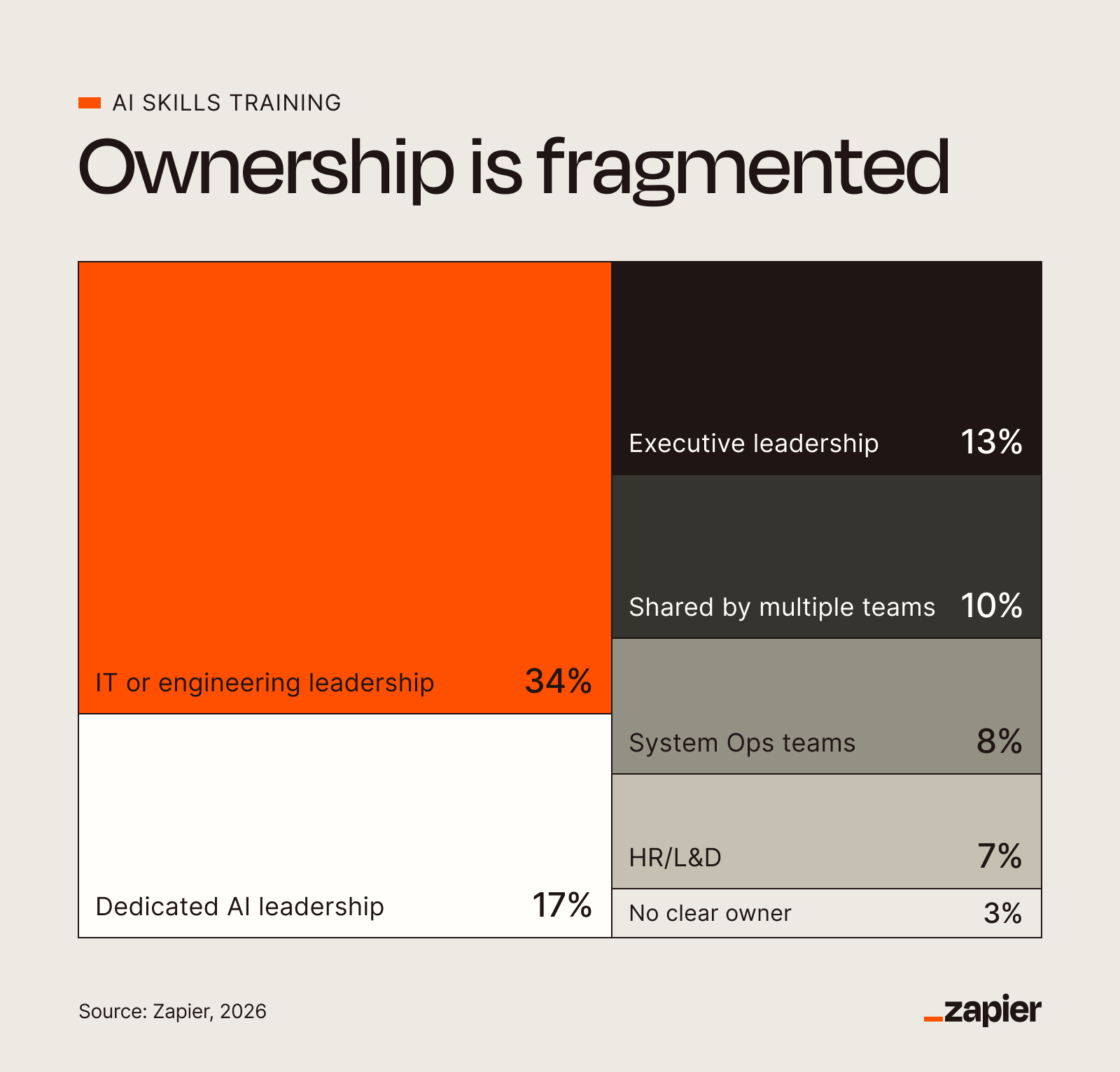
While prompt engineering offers immediate gains, the ongoing effort required to maintain prompt effectiveness is often underestimated. LLMs evolve, and business objectives shift. What worked last month might yield suboptimal results today, forcing teams into a continuous cycle of prompt refinement. This isn’t a one-time setup; it’s an ongoing operational overhead that can consume significant time if not managed strategically, leading to a subtle but persistent drain on resources.
The allure of AI-generated insights can also create a dangerous dependency. Teams, especially those under pressure, might default to accepting AI outputs as definitive truths without sufficient critical scrutiny or cross-referencing with real-world context. This isn’t just about data literacy; it’s about maintaining human judgment and domain expertise as the ultimate arbiter. Over-reliance can mask underlying data quality issues or lead to decisions based on statistically sound but practically irrelevant or even misleading information, eroding trust in the long run.
Furthermore, the ‘seamless integration’ of AI tools often proves more complex in practice than in theory. Beyond the initial setup, teams face the ongoing challenge of managing multiple vendor relationships, API changes, and ensuring data consistency across disparate platforms. It’s easy to overlook the administrative burden and the potential for technical debt that accumulates when patching together various AI solutions. For SMBs, this often means deprioritizing the pursuit of the ‘perfect’ integrated stack. Instead, focus on a few high-impact tools that solve immediate pain points, even if they don’t integrate perfectly. Chasing comprehensive integration too early can lead to significant time sinks and frustration, diverting precious resources from actual marketing execution for marginal gains in efficiency.
What to Deprioritize (and Why) Today
For small to mid-sized businesses, it’s critical to understand what *not* to focus on right now. You should absolutely deprioritize deep dives into AI model development, complex machine learning algorithms, or attempting to build proprietary AI from scratch. These areas demand significant research and development budgets, specialized data science teams, and long development cycles that are simply beyond the scope and resources of most SMBs. Investing in these areas would divert critical funds and attention from more immediate, impactful marketing initiatives.
Your focus should remain squarely on becoming expert *users* of existing AI tools and platforms, not on becoming AI developers. Leave the foundational AI research and development to the tech giants; your competitive advantage lies in agile, intelligent application of readily available AI solutions to solve your specific marketing challenges.
Practical Strategies for Upskilling Your Existing Team
Upskilling doesn’t require a massive training budget or hiring an entirely new department. Focus on practical, integrated approaches:
- Internal Workshops & Peer Learning: Designate an

Leave a Comment