

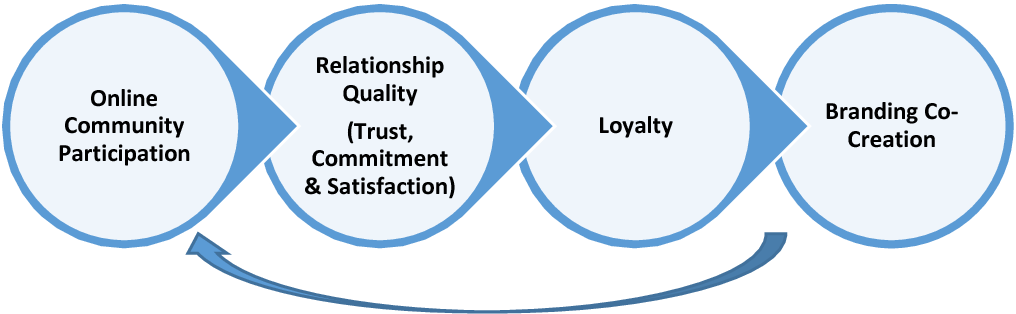
This article cuts through the noise to offer practical strategies for small to mid-sized businesses looking to build active social media communities and harness brand co-creation. You’ll learn how to engage your most passionate customers, gather invaluable feedback, and generate authentic content without overstretching your limited resources. Our focus is on actionable steps that deliver real benefits, helping you make informed decisions about where to invest your time and effort for maximum impact.
Why Co-Creation Matters for SMBs Today
In today’s crowded digital landscape, simply broadcasting your message isn’t enough. Small to mid-sized businesses often struggle to compete with larger budgets for attention. Brand co-creation offers a powerful, cost-effective alternative: turning your customers into active participants in your brand’s story and development. This isn’t just about collecting user-generated content; it’s about establishing a two-way dialogue, inviting feedback, and empowering your community to contribute ideas, content, and advocacy. For teams with limited headcount, this approach can significantly amplify your marketing efforts and build deeper loyalty.
The real value for SMBs lies in the authenticity and trust it generates. Consumers are increasingly skeptical of traditional advertising. Content and ideas that originate from within your community carry more weight and resonate more deeply, leading to higher engagement and more sustainable growth. It also provides direct, unfiltered market intelligence, helping you refine products and services based on actual user needs.
Prioritizing Your Co-Creation Initiatives
Given limited resources, you can’t do everything. The key is to start small and focus on impact. Here’s a pragmatic approach to prioritization:
- Identify Your Core Advocates First: Don’t try to engage everyone at once. Pinpoint your most loyal, vocal customers. These are the individuals already championing your brand, providing feedback, or creating content organically. Tools like social listening platforms or even a simple CRM can help identify these key players.
- Choose the Right Platform, Not Just Any Platform: Resist the urge to be everywhere. Focus on the social platforms where your identified core advocates are already most active and engaged. For many SMBs, this might be a private Facebook Group, a dedicated Discord server, or even a specific subreddit. The goal is to meet them where they are, reducing friction for participation.
- Define Clear Value for Participants: People won’t contribute without a reason. This isn’t always monetary. It could be early access to new products, direct influence on future features, exclusive content, recognition, or simply a sense of belonging to an exclusive community. Be explicit about what participants gain.
What often gets overlooked in the initial enthusiasm for co-creation is the sustained internal effort required to make it valuable. It’s not enough to simply open the channels; you need dedicated resources to actively moderate discussions, synthesize feedback, and communicate back to participants. This isn’t a “set it and forget it” initiative. Underestimating this ongoing time commitment can quickly lead to internal team burnout, pulling critical personnel away from other core responsibilities and leaving your co-creation efforts to wither from neglect.
A common pitfall is failing to establish a clear internal process for handling the influx of ideas and feedback. Without a defined pathway for review, prioritization, and integration into your product or marketing roadmap, even the most brilliant co-created insights can get lost. This creates a downstream effect: participants, who invested their time and creativity, will quickly disengage if they perceive their contributions are consistently ignored or disappear into a black hole. Managing these expectations requires transparent communication about what’s feasible and why certain ideas might not be pursued, which can be a difficult conversation for lean teams to navigate.
Practical Strategies for Engaging Your Community
Once you’ve identified your core, it’s time to foster active participation. Remember, this is about collaboration, not just consumption.
- Structured Feedback Loops: Move beyond generic “what do you think?” questions. Implement specific mechanisms for feedback. This could involve beta testing new features with a select group, running polls on product variations, or hosting Q&A sessions where community members can directly influence decisions. For instance, if you’re a SaaS company, invite your power users to a private Slack channel to test a new UI. If you sell physical products, ask for input on new colorways or packaging designs.
- Empower Content Creators: Encourage your community to create content related to your brand. This might be product reviews, tutorials, unboxing videos, or sharing their experiences. Provide clear guidelines and, crucially, a simple way for them to submit or tag their content. Regularly feature and credit their contributions on your official channels. This not only provides authentic content but also validates their effort and encourages others.
- Host Exclusive Events and Discussions: Create opportunities for your community to connect with each other and with your team. This could be a live Q&A with your founder, a virtual workshop, or a themed discussion thread. These events build a stronger sense of community and give members a reason to return.
- Recognize and Reward Contributions: Publicly acknowledge valuable contributions. This could be a “community member of the month” spotlight, shout-outs on social media, or even small, non-monetary tokens of appreciation. The goal is to make contributors feel valued and seen.
What often gets overlooked in these strategies are the hidden costs and downstream effects, especially for teams operating with limited resources. For instance, structured feedback loops are powerful, but they create an implicit expectation that feedback will be acted upon or, at minimum, acknowledged with a clear rationale. The real work isn’t just collecting input; it’s the subsequent communication loop. Small teams frequently underestimate the time required to genuinely review all feedback, synthesize it, and then clearly communicate why certain suggestions are being implemented, delayed, or even rejected. Failing to close this loop can lead to community members feeling unheard, their efforts wasted, and ultimately, disengagement. This isn’t just a missed opportunity; it’s a trust erosion that’s hard to rebuild.
Similarly, empowering content creators sounds like a clear win, but it introduces a significant, often underestimated, moderation burden. Not all user-generated content (UGC) will align with your brand’s quality standards, tone, or even legal requirements. Small teams, already stretched thin, can quickly find themselves overwhelmed by the need to review, edit, or reject submissions. The decision pressure here is real: publish something subpar and risk brand dilution, or reject a passionate community member and risk alienating them. This hidden operational cost can quickly outweigh the perceived benefits if not properly resourced, turning an exciting initiative into a source of team frustration.
Finally, while recognizing and rewarding contributions is vital, the practical challenge lies in consistency and perceived fairness. It’s easy to spotlight a few high-profile contributors, but what about the consistent, quieter participants? If recognition becomes sporadic, or if the criteria for being “seen” are unclear, it can inadvertently demotivate the broader community. Instead of fostering a sense of shared accomplishment, an inconsistent system can breed a subtle resentment or a feeling that only certain types of contributions are valued. This second-order effect undermines the very goal of community building, turning a positive reinforcement into a source of frustration for many, and making future engagement harder to cultivate.
What to Deprioritize or Avoid Today
For small to mid-sized teams, resource allocation is critical. Here’s what you should likely deprioritize or skip entirely for now:
Avoid chasing every new social media platform or “metaverse” trend. While it’s tempting to jump on the latest hype, establishing a meaningful co-creative community requires consistent effort and deep engagement. Spreading your limited resources thin across too many platforms will dilute your impact and lead to superficial interactions. Stick to one or two platforms where your audience is genuinely active and where you can dedicate the necessary time to nurture relationships. Building a strong foundation on existing, proven channels is far more effective than superficial presence everywhere. Similarly, deprioritize complex, custom-built community platforms unless you have significant development resources. Leverage existing, robust platforms like Facebook Groups, Discord, or even a forum plugin on your website, as they offer lower overhead and a familiar user experience for your audience. effective social media for small business
Also, do not automate genuine human interaction. While tools can help manage communities, co-creation thrives on authentic conversations. Over-reliance on bots for responses or content generation in community spaces will quickly erode trust and make members feel unheard. Your community managers need to be present, responsive, and genuinely engaged. If you ask for feedback, you must be prepared to listen, acknowledge, and, where appropriate, act on it. Ignoring community input is a surefire way to kill participation.
Measuring the Impact of Co-Creation
Measuring success goes beyond vanity metrics. Focus on indicators that reflect genuine engagement and business value:
- Engagement Rate within the Community: Look at active participation rates, not just member counts. How many members are posting, commenting, or reacting regularly?
- Quality of Contributions: Are members providing thoughtful feedback, creative content, or valuable insights? This is often qualitative but can be tracked through content analysis.
- Referral Traffic and Conversions: Track how many community members convert into customers or refer new customers. Use specific tracking links or codes for community-exclusive offers.
- Customer Retention and Lifetime Value (LTV): Engaged community members often have higher retention rates and LTV. Monitor these metrics for your community segment versus your general customer base.
- Product/Service Improvement: Quantify how many community-sourced ideas or feedback points have led to actual product or service enhancements.
Sustaining Your Co-Creative Ecosystem
Building a co-creative community is an ongoing process, not a one-time campaign. To sustain momentum, consistently nurture your ecosystem. This means maintaining regular communication, continuing to offer value to participants, and evolving your co-creation initiatives based on community feedback. Be transparent about your decisions and always show appreciation for their contributions. A thriving community becomes a self-sustaining engine for growth and innovation, provided you continue to fuel it with genuine engagement and respect. building brand loyalty through community


Leave a Comment